Show Times
Thursday 2, April
Friday 3, April
Saturday 4, April
Sunday 5, April
Monday 6, April
Tuesday 7, April
Wednesday 8, April

Fackham Hall
MViolence, sexual references & offensive language
A new porter who embarks on an unlikely relationship with the youngest daughter of a prominent UK family. At the same time, rivalries are spilling over in the Davenport family, led by Lord and Lady Davenport as they also weather the epic failure of the wedding of their eldest daughter to her caddish cousin.

Hamnet
MSex scenes
GOLDEN GLOBE WINNER! BEST MOTION PICTURE - DRAMA BEST PERFORMANCE BY A FEMALE ACTOR IN A MOTION PICTURE - DRAMA In 1580s England, Latin tutor William Shakespeare (Mescal) meets the free-spirited Agnes (Buckley). Infatuated with one another, the pair marry and give birth to three children, who grow up acting in their father’s burgeoning plays. But as William begins to pursue a career in the theatre in London, tragedy strikes at home, shattering Agnes and William’s relationship, their family, and their life. Unable to mend themselves after such a tragedy, this shared experience soon finds a release as Agnes learns of William’s latest play; a timeless masterpiece known as The Tragedy of Hamlet, Prince of Denmark. " They will be talking about Jessie Buckley’s performance for years" - David Fear Rolling Stone

Holy Days
PGDrug use & coarse language
From the team behind the Kiwi hit Uproar, Holy Days is a hilarious, heartwarming 1970s dramedy with a star-studded cast: Judy Davis, Miriam Margolyes, and Jacki Weaver. When young Brian discovers plans to close a convent of delightfully eccentric nuns, he sets off on a wild road trip across New Zealand to save them. Packed with laughs, quirky characters, and heart, this is a joyful adventure the young at heart will adore.

I Swear
RP13Violence, suicide themes, sexual references & offensive language
I Swear follows the true story of Tourette Syndrome campaigner John Davidson's journey with Tourette's through his troubled teens and early adulthood, having been diagnosed at 15 years old in 1980s Britain - a time when the condition was little known and entirely misunderstood. Initially alienated from his peers and his family, Davidson perseveres in his attempt to live a 'normal' life against the odds, finding some unlikely champions along the way.

Met Opera 2025-26: Andrea Chénier
M
ACT I Spring, 1789, at the Château de Coigny near Paris. Gérard, servant to the Countess de Coigny, mocks the aristocracy and their manners. Observing his father struggle with a piece of furniture, Gérard laments the suffering of all servants under their arrogant masters (“Son sessant’anni”). Maddalena, the Countess’s daughter, appears and Gérard realizes how much he loves her. Busy with preparations for a soirée that evening, the Countess scolds Maddalena for not yet being dressed. Maddalena complains to her servant, Bersi, about the discomfort of the current fashions and then runs out to change. Among the guests to arrive is Fléville, a novelist, who has brought with him the rising poet Andrea Chénier. After the Abbé relates the latest depressing news from Paris, Fléville enlivens the party with a pastorale he has written for the occasion. Maddalena then teases a reluctant Chénier into improvising a poem (“Un dì all’azzurro spazio”). Chénier scandalizes the guests with his criticism of the indifference of the clergy and the aristocracy to the suffering of the impoverished. The guests’ gavotte is interrupted by Gérard, who brings in a group of starving peasants. The Countess orders Gérard out along with the rabble. The guests are then invited to return to the gavotte, but they depart instead, and the Countess is left alone. ACT II Spring, 1794, along the Cours-la-Reine in Paris. The Revolution has begun, and the Reign of Terror is in full force. To fend off the Incredibile, a spy, Bersi pretends to be a daughter of the Revolution (“Temer? Perchè?”). The Incredibile is not deceived and notices that Chénier is waiting for someone in the Café Hottot. Chénier is joined by his friend Roucher, who has brought a passport so that Chénier may leave the country safely. Chénier says his destiny is to remain to find the love he has never had and to discover who has been writing him anonymous letters (“Credo a una possanza arcana”). A procession of dignitaries led by Gérard interrupts their conversation. The Incredibile takes Gérard aside to ask about the woman he is looking for. Gérard describes Maddalena to him. Meanwhile, Bersi asks Chénier to wait at the café for someone who wants to meet him. Maddalena appears and reveals to Chénier that it was she who wrote the letters. They pledge to love each other until death (“Ora soave”). The Incredibile, having seen Chénier and Maddalena together, brings Gérard to the scene. Gérard is wounded as Chénier defends Maddalena. Gérard, however, recognizes Chénier and sends him away, asking him to protect Maddalena. When the gathering crowd asks who wounded Gérard, he answers that his assailant was unknown. ACT III July 24, 1794, in the courtroom of the Revolutionary Tribunal. Mathieu, a revolutionary, is unsuccessfully urging the crowd to donate to the cause. Gérard, recovered from his wound, makes an impassioned plea for the motherland. Madelon, an old woman who has already lost her son and a grandson in the war, offers her last grandson as a soldier (“Son la vecchia Madelon”). As the crowd disperses, the Incredibile appears. If Gérard wants to have Maddalena, the Incredibile insists, he must first arrest her lover, Chénier. As Gérard writes the accusation, he is filled with remorse at the bloodshed he has caused in his rise to power. He concedes that his new master is passion (“Nemico della patria”). No sooner does he hand Chénier’s indictment to the court clerk than Maddalena appears. Gérard admits that he has laid a trap for her and that he loves her. Maddalena offers herself to Gérard if he will save Chénier. She has been a fugitive, her mother was killed in the Revolution and their home was burned (“La mamma morta”). Touched by her love for Chénier, Gérard promises to try to save him. The Tribunal convenes with an unruly mob in attendance. Chénier pleads for his life (“Sì, fui soldato”) and Gérard admits to the judges that the accusation he wrote was false. Nevertheless, Chénier is sentenced to death and taken away. ACT IV July 25, 1794, in the ruins of Paris’ St. Lazare prison. Chénier reads a final poem (“Come un bel dì di maggio”) to his friend Roucher, who then bids him a final farewell. Gérard and Maddalena are met by the jailer, Schmidt, whom Maddalena bribes with some jewels to allow her to take the place of another young woman sentenced to death. Gérard leaves to once again plead Chénier’s case with Robespierre. Maddalena tells Chénier she is there to die with him. As the day dawns, they share one final moment together (“Vicino a te”) before being taken to the guillotine.
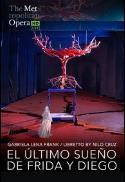
Met Opera 2025-26: El Último Sueño de Frida y Dieg
TBC
American composer Gabriela Lena Frank makes her Met debut with her first opera, a magical-realist portrait of Mexico’s painterly power couple Frida Kahlo and Diego Rivera, with libretto by Pulitzer Prize–winning playwright Nilo Cruz. Fashioned as a reversal of the Orpheus and Euridice myth, the story depicts Frida, sung by leading mezzo-soprano Isabel Leonard, leaving the underworld on the Day of the Dead and reuniting with Diego, portrayed by baritone Carlos Álvarez. The famously feuding pair briefly relive their tumultuous love, embracing both the passion and the pain before bidding the land of the living a final farewell. Yannick Nézet-Séguin conducts the Met premiere of Frank’s opera, a “confident, richly imagined score” (The New Yorker) that “bursts with color and fresh individuality” (Los Angeles Times). The vibrant new production, taking enthusiastic inspiration from Frida and Diego’s paintings, is directed and choreographed by Deborah Colker, following her remarkable 2024 debut staging of Ainadamar.
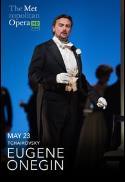
Met Opera 2025-26: Eugene Onegin
TBC
ACT I Russia, 19th century. Autumn in the country. On the Larin estate. Madame Larina reflects upon the days before she married, when she was courted by her husband but loved another. She is now a widow with two daughters: Tatiana and Olga. While Tatiana spends her time reading novels, with whose heroines she closely identifies, Olga is being courted by their neighbor, the poet Lenski. He arrives unexpectedly, bringing with him a new visitor, Eugene Onegin, with whom Tatiana falls in love. Tatiana asks her nurse Filippyevna to tell her of her first love and marriage. Tatiana stays up all night writing a passionate letter to Onegin and persuades Filippyevna to have her grandson deliver it in the morning. Tatiana waits for Onegin’s response in the garden. He admits that he was touched by her declaration but explains that he cannot accept it and can only offer her friendship. He advises her to control her emotions, lest another man take advantage of her innocence. ACT II January. The local community has been invited to the Larin estate to celebrate Tatiana’s name day. Onegin has reluctantly agreed to accompany Lenski to what he mistakenly believes will be an intimate family celebration. Annoyed to find himself trapped at an enormous party and bored by the occasion, Onegin takes his revenge on Lenski by flirting and dancing with Olga. Lenski’s jealousy is aroused to such a height that he challenges Onegin to a duel. The party breaks up. Before the duel, Lenski meditates upon his poetry, upon his love for Olga, and upon death. Lenski’s second finds Onegin’s late arrival and his choice of a second insulting. Although both Lenski and Onegin are full of remorse, neither stops the duel. Lenski is killed. ACT III St. Petersburg. Having travelled abroad for several years since the duel, Onegin has returned to the capital. At a ball, Prince Gremin introduces his young wife. Onegin is astonished to recognize her as Tatiana and to realize that he is in love with her. Onegin has sent a letter to Tatiana. He arrives at the Gremin palace and begs her to run away with him. Tatiana admits that she still loves him, but that she has made her decision and will not leave her husband. Onegin is left desperate. —Reprinted courtesy of English National Opera

Met Opera 2025-26: I Puritani
M
ACT I England, around 1650. Plymouth, a Puritan stronghold, is threatened by siege from the Royalist troops. Distant voices herald the wedding day of Elvira, daughter of Gualtiero, the fortress’s commander. Riccardo enters lamenting that his promised bride, Elvira, loves another man—a Stuart partisan. Her father will not force her to marry against her will, it seems, so Riccardo’s friend Sir Bruno urges him to devote his life to leading the parliamentary forces. Elvira tells her uncle, Giorgio, that she would rather die than marry Riccardo. Her uncle reassures her that he has persuaded her father to let her marry her lover, Arturo. Although Arturo is a Royalist, he is heralded as he approaches the castle. Everyone gathers for the wedding celebration and Arturo greets his bride. He learns that King Charles’s widow, Queen Enrichetta, is a prisoner in the castle and soon to be taken to trial in London. Alone with the queen, Arturo offers to save her even if it means his death. Elvira returns with the bridal veil and capriciously places it over Enrichetta’s head. When he is alone again with the queen, Arturo explains that the veil will provide the perfect disguise for escape from the castle. As they are about to leave, Riccardo stops them, determined to kill his rival. Enrichetta separates them and reveals her identity. Riccardo lets them get away, knowing this will ruin Arturo. The others return for the wedding, and Riccardo tells of Arturo’s escape with Enrichetta. Soldiers rush off in pursuit. Elvira, believing herself betrayed, is overcome by madness. ACT II The townsfolk mourn Elvira’s mental breakdown. Giorgio explains that she continues to long for Arturo. Riccardo arrives to announce that Arturo has been condemned to death by Parliament. The Puritans depart. Elvira wanders in, reliving her happy past. In her madness, she mistakes Riccardo for Arturo and dreams of her wedding. When she leaves, Giorgio tries to convince Riccardo to save Arturo. At first indignant, Riccardo is finally moved to help Elvira, and the two men unite in patriotism: if Arturo returns as a friend, he shall live—if as an armed enemy, he shall die. ACT III In Elvira’s garden, Arturo reveals that love for her has brought him back to Plymouth. He overhears her sing their old love song and is torn between his affection and his loyalty to the Stuarts. Elvira herself appears and Arturo reassures her that she is his only love. Soldiers rush in to arrest Arturo. Just then, a diplomat arrives with the news of the Royalists’ final defeat and a general amnesty for all the offenders. The shock of this news restores Elvira’s senses, and all rejoice in the peace as Elvira and Arturo embrace their new happiness.

Met Opera 2025-26: Tristan und Isolde
TBC
ACT I Isolde, an Irish princess, is being taken to Cornwall aboard the ship of Tristan, whose uncle, King Marke, plans to marry her. She becomes enraged by a sailor’s song about an Irish girl, and her maid, Brangäne, tries to calm her. Isolde interrogates Tristan, but he replies evasively. His companion Kurwenal loudly ridicules the Irish women and sings a mocking verse about Morold, Isolde’s fiancé, who was killed by Tristan when he came to Cornwall to exact tribute for Ireland. Isolde, barely able to control her anger, tells Brangäne how the wounded Tristan came to her in disguise after his fight with Morold so that he could be healed by Isolde’s knowledge of herbs and magic, which she learned from her mother. Isolde explains to Brangäne that she recognized Tristan, but her determination to take revenge for Morold’s death dissolved when he pleadingly looked her in the eyes. She now bitterly regrets her reluctance to kill him and wishes death for him and herself. Brangäne reminds her that to marry a king is no dishonor and that Tristan is simply performing his duty. Isolde maintains that his behavior shows his lack of love for her, and asks Brangäne to prepare her mother’s death potion. Kurwenal tells the women to prepare to leave the ship, as shouts from the deck announce the sighting of land. Isolde insists that she will not accompany Tristan until he apologizes for his offenses. He appears and greets her with cool courtesy. When she tells him she wants satisfaction for Morold’s death, Tristan offers her his sword, but she will not kill him. Instead, Isolde suggests that she and Tristan make peace with a drink of friendship. He understands that she means to poison them both, but still drinks, and she does the same. Expecting death, they exchange a long look of love, then fall into each other’s arms. Brangäne admits that she has in fact mixed a love potion, as sailors’ voices announce the ship’s arrival in Cornwall. ACT II In the garden of Marke’s castle, Isolde waits impatiently for a rendezvous with Tristan, while distant horns signal the king’s departure on a hunting party. Isolde believes that the party is far off, but Brangäne warns her about spies, particularly Melot, a jealous knight whom she has noticed watching Tristan. Isolde replies that Melot is Tristan’s friend. She sends Brangäne off to stand watch and puts out the warning torch. When Tristan appears, she welcomes him passionately. They praise the darkness that shuts out the light of conventionality and false appearances and agree that they feel secure in the night’s embrace. Brangäne’s distant voice warns that it will be daylight soon, but the lovers are oblivious to any danger and compare the night to death, which will ultimately unite them. Kurwenal rushes in with a warning: the king and his followers have returned, led by Melot, who denounces the lovers. Moved and disturbed, Marke declares that it was Tristan himself who urged him to marry and choose the bride. He does not understand how someone so dear to him could dishonor him in such a way. Tristan cannot answer. He asks Isolde if she will follow him into the realm of death. When she accepts, Melot attacks Tristan, who falls wounded into Kurwenal’s arms. ACT III Back at his castle, the mortally ill Tristan is tended by Kurwenal. A shepherd inquires about his master, and Kurwenal explains that only Isolde, with her magic arts, could save him. The shepherd agrees to play a cheerful tune on his pipe as soon as he sees a ship approaching. Hallucinating, Tristan imagines the realm of night where he will return with Isolde. He thanks Kurwenal for his devotion, then envisions Isolde’s ship approaching, but the shepherd’s mournful tune signals that the sea is still empty. Tristan recalls the melody, which he heard as a child. It reminds him of the duel with Morold, and he wishes Isolde’s medicine had killed him then instead of making him suffer now. The shepherd’s tune finally turns cheerful. Tristan gets up from his sickbed in growing agitation and tears off his bandages, letting his wounds bleed. Isolde rushes in, and he falls, dying, in her arms. When the shepherd announces the arrival of another ship, Kurwenal assumes it carries Marke and Melot, and barricades the gate. Brangäne’s voice is heard from outside, trying to calm Kurwenal, but he will not listen and stabs Melot before he is killed himself by the king’s soldiers. Marke is overwhelmed with grief at the sight of the dead Tristan, while Brangäne explains to Isolde that the king has come to pardon the lovers. Isolde, transfigured, does not hear her, and with a vision of Tristan beckoning her to the world beyond, she sinks dying upon his body.

Midwinter Break
MOffensive language
MIDWINTER BREAK is a compelling story about lost faith, commitment, and the enduring power of love, as a longtime couple takes a life-changing trip to Amsterdam.

Tenor: My Name is Pati
PGCoarse language
This music-packed documentary tells the story of Pene Pati and his brother Amitai Pati, and their against-the-odds journey from Samoa to platinum-selling success in the trio Sol3 Mio and on to the world’s greatest opera stages. Bursting with humour, heart and soaring performances, the film reveals the resilience born of adversity, the richness of family and culture, and the rewards that come from following an unlikely dream.